
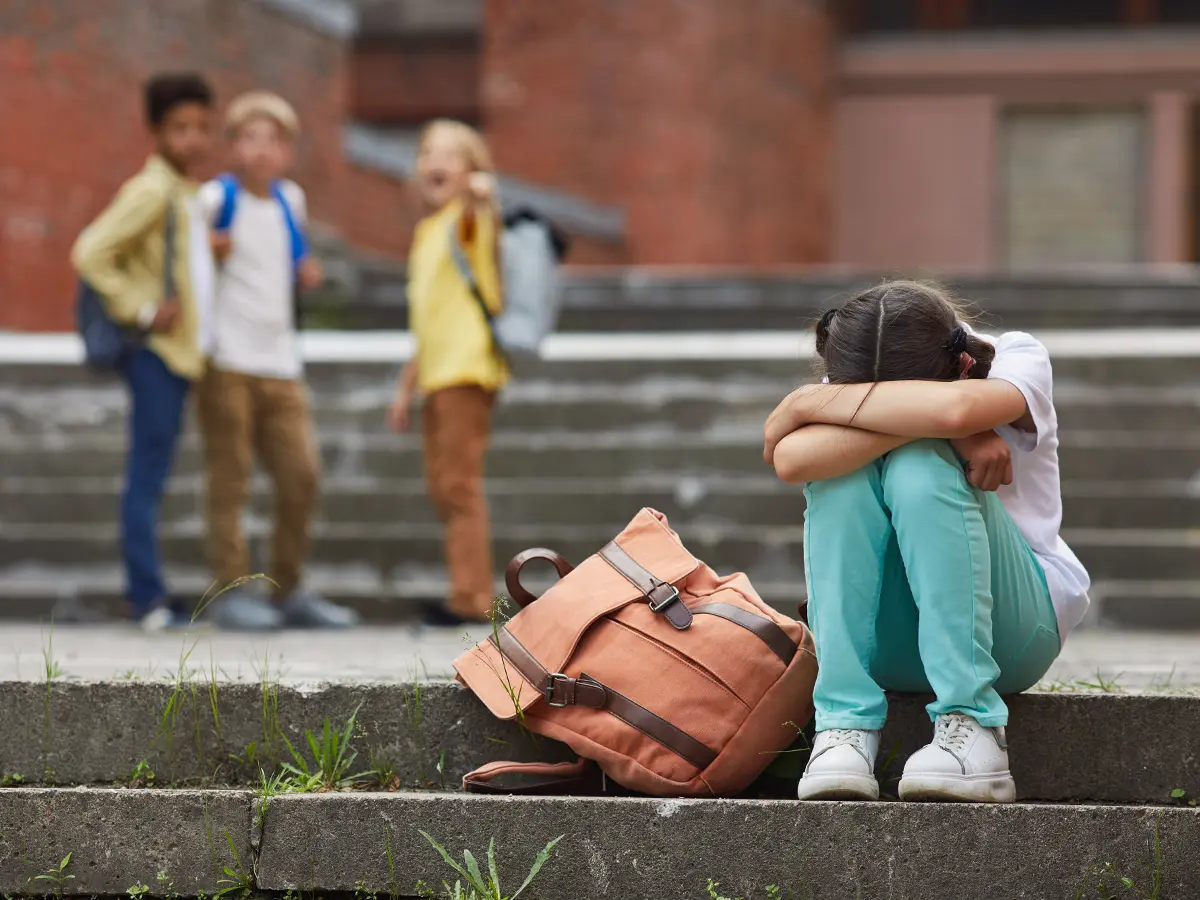
Bullying has become increasingly common in school environments. In fact in America alone, about 19.2% of students ages 12-18 in grades 6-12 reported being bullied, with approximately 15.4% of students reporting being bullied with a power imbalance, 14.5% being bullied repeatedly, and 12.7% being bullied with both a power imbalance and repetition. These stats represent not just schools, but the trouble faced by children worldwide.
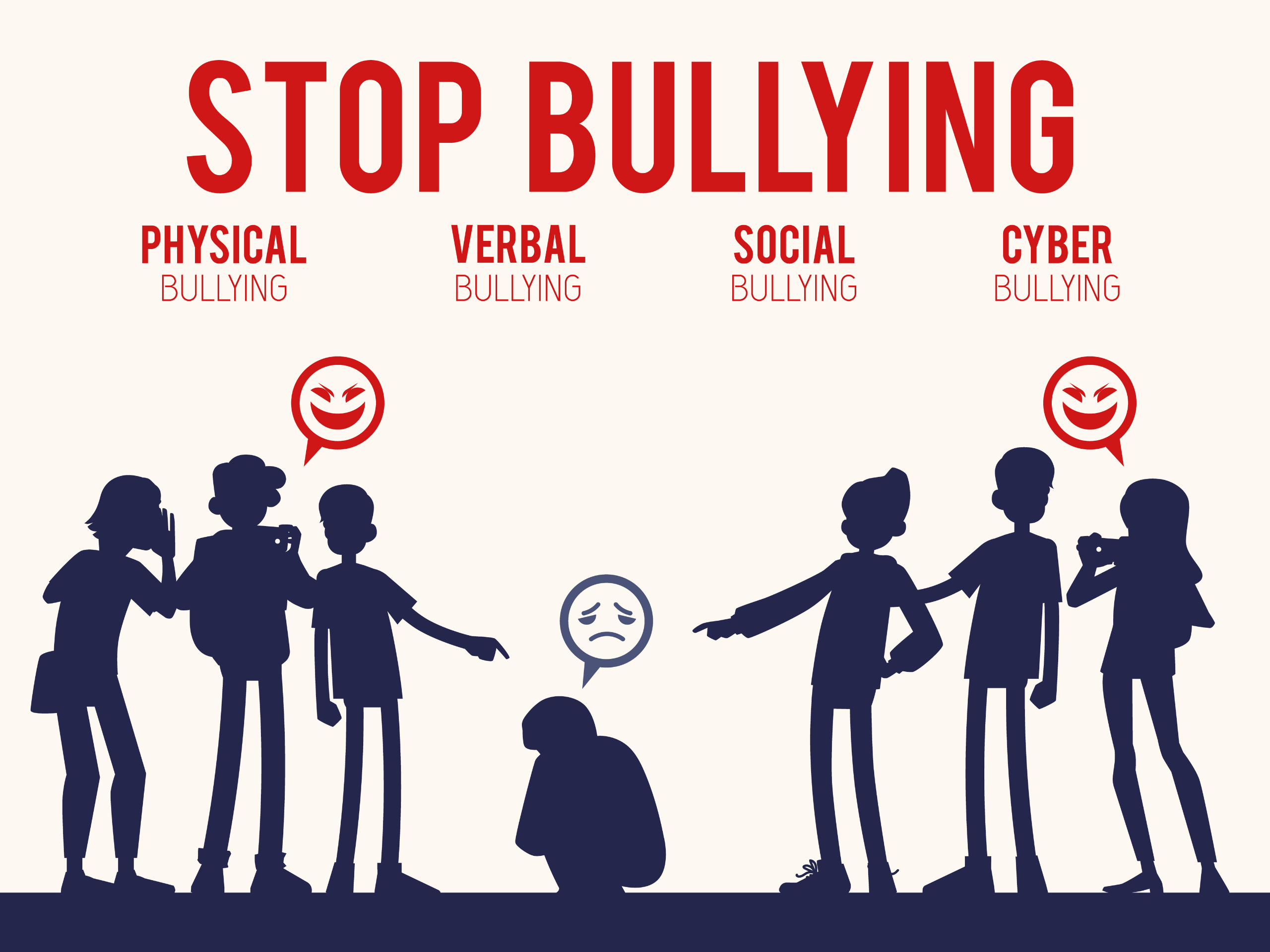 Bullying is much more than just an issue that can be solved with a parent-teacher meeting. Bullying stems from insecurity and complex psychological feelings. Bullying begins as insecurity and slowly grows into emotional anxiety and even the lack of empathy. As humans, our empathy and soft skills are born characteristics, which is something even AI will find hard to replicate.
Bullies are individuals who have been shunned out of society and are just seeking revenge, but in the wrong way. So if you have been closely following then you will understand where this is going. Bullying is like a cycle. Victims can victimize others and victims too will be emotionally affected.
But bullying can also stem from home and the environment. When one feels unwanted or useless, insecurity begins to play in their mind. And that is when the human mind begins to move into a ‘self-comfort mode’. This often means bullying or even insulting those who seem to be better than you. Bullying can also happen to those who are perceived to be different, maybe because of ethnicity or race.
While one can say bullying is much more complex than this, I completely agree. These are just my views and my research. But in a nutshell, anyone can be a bully. It is just an emotional response. But with the right monitoring and knowledge, victims can be reduced and so can the bullies.
Bullying can also occur through various platforms. But whether it is cyberbullying or physical bullying, the reasons remain similar.
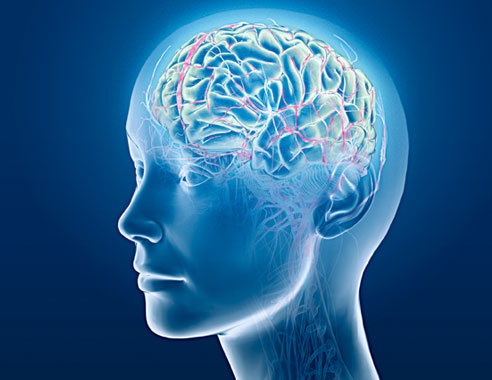 Bullying is a societal concern not because of its physical effects but also the fact that it can hinder development. Bullying triggers chronic stress, flooding the brain with cortisol, a hormone that disrupts normal development. This is turn affects brain development and damages the prefrontal cortex (PFC) and hippocampus, impairing emotion regulation, memory, and executive functions like focus and decision-making. This leads to potential long-term issues like anxiety, depression, and altered brain structure, affecting learning and social skills.
With these long-term effects in mind, governments, schools and communities alike have taken strides to assuage bullying.
This includes the inclusion of SEL (social and emotional learning) by schools, that helps students make empathy a hard skill. Awareness is crucial while government policies have paved the path for inclusion and action.
But in my opinion, not only is the bully also a victim of something more psychological but also an individual who is yet to nurture his emotional response. And emotional response plays a crucial role whether it is for the victim or the bully.
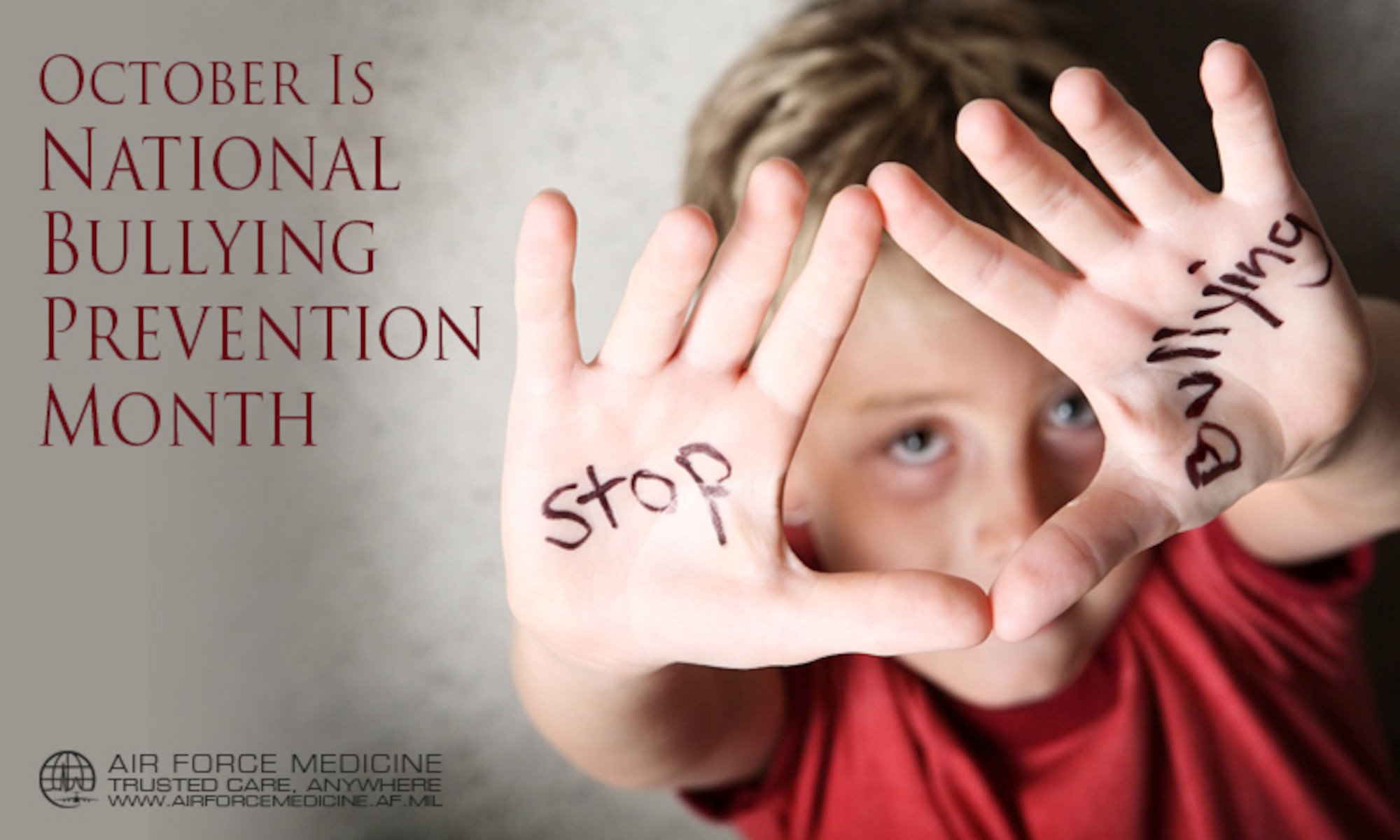
But we cannot discount the famous model of turning the bystander into an upstander. Because like I stated before, bullies can be influenced and stopped. This statement is further proven by research with analysis showing that when a bystander intervenes, bullying stops within 10 seconds more than 50% of the time. But that requires someone to step up and prevent bullying around them. And that is one of the most vital step students can take to put an end to bullying.
So, as outlined, bullying is a complex emotional response. Numbers have shown an upward trend in our increasingly competitive world. But with the right mindset, awareness and knowledge, we can turn this around. Bullying maybe a cyclic process but it is not an incurable pandemic. Empathy and respect are the key human values that must be nurtured and together we as the human race can deal with this problem.
___________________________________
Credits for ‘The Bullying Enigma’
Cover Image Credits: https://www.understood.org/en/articles/the-bullying-problem-what-you-need-to-know
Inside Image Credits:
1. https://www.airforcemedicine.af.mil/News/Article/962257/break-the-cycle-of-bullying/
2. https://bullyingepidemic.com/bullying-a-pain-in-the-brain/
3. https://wapave.org/bullying-at-school-resources-and-the-rights-of-students-with-special-needs/
Do read these links to know more about bullying:
- https://www.ncbi.nlm.nih.gov/books/NBK390414/
- https://wapave.org/bullying-at-school-resources-and-the-rights-of-students-with-special-needs/
- https://www.brainfacts.org/thinking-sensing-and-behaving/childhood-and-adolescence/2015/bullying-and-the-brain
- https://www.stopbullying.gov/sites/default/files/2017-10/consequences-of-bullying-fact-sheet.pdf
Do follow https://ethansliteraryhaven.com/ for more such writings.